
Improved Transit Network
Six commitments the next council can act on to build a transit network that serves the workers, patients, and family visitors who depend on it.
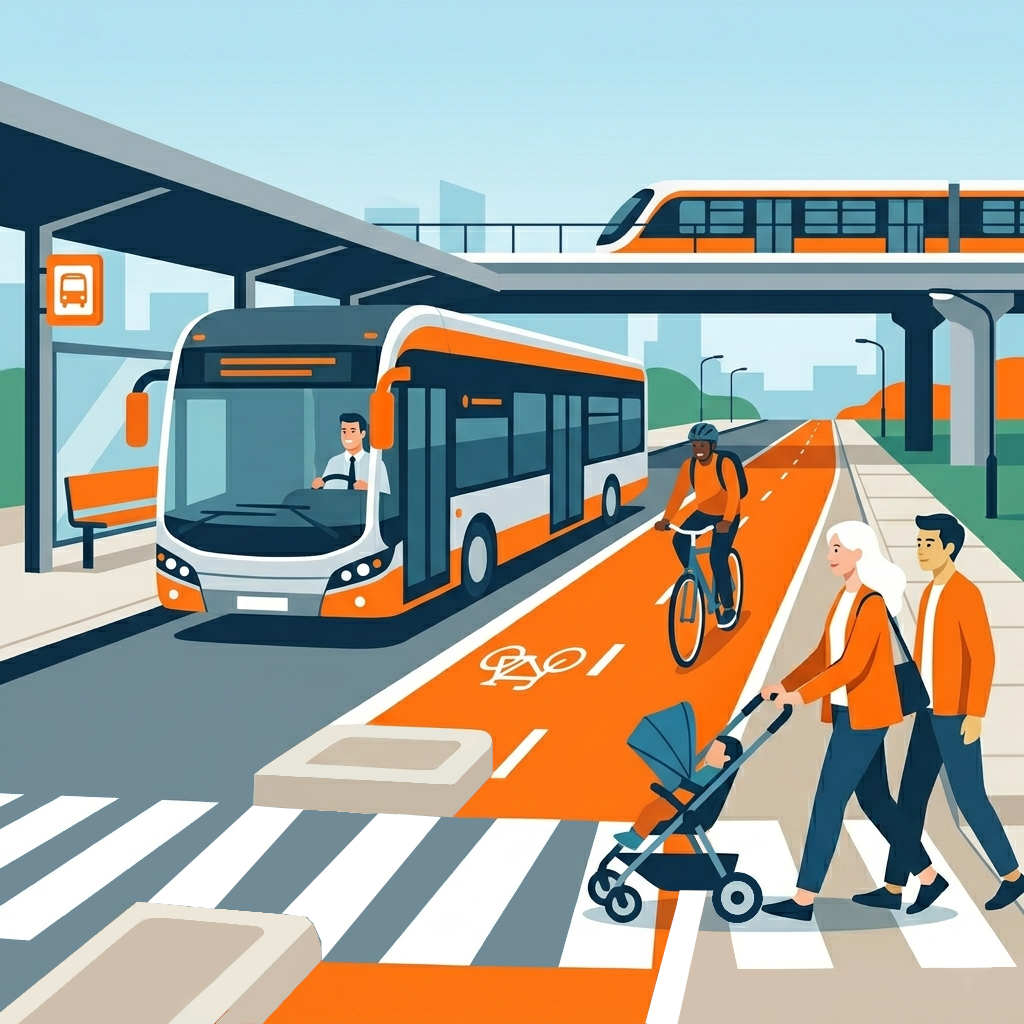
Transit in Nanaimo is where small, specific changes compound into a system that serves the people who depend on it. The framing throughout is healthcare-centric: the patients, the healthcare workers, and the family visitors who move to and from the regional hospital carry a disproportionate share of the daily transit demand. The next council should make a set of concrete commitments and finish them.
Commitments
A Health Transit Corridor to Nanaimo Regional General Hospital. Direct, frequent service from the major exchanges (Country Club, Woodgrove, downtown) and the Hullo terminal to the regional hospital, with target frequencies of fifteen minutes during peak periods and thirty minutes off-peak. The main bus to the regional hospital currently runs once an hour. For healthcare shift workers on a 6 AM start, for seniors arriving for appointments, for family visitors after surgery, that once-an-hour schedule is the difference between getting to the hospital and not getting there. The capital cost is comparatively small, and the provincial cost-sharing model through BC Transit covers most of the operating expense. The mechanism is a Nanaimo councillor on the Regional District of Nanaimo board making this the top operational ask going to BC Transit, and keeping the file moving until the frequencies are real.
A public review of the five main routes that carry Nanaimo's ridership. The Rapid #1, the #7, the #15, the #30, and the #40. Frequency on the Rapid #1 was upgraded from thirty-minute to twenty-minute service in January 2026, which is real progress. The other four have not had the same attention. The scope of the review is current ridership, frequency, span of service, on-time performance, and the gap between the route's design and the trips its riders are making today. Findings published. Recommended changes with deadlines. The RDN's Three-Year Transit Improvement Program is the vehicle by which the review reaches BC Transit, and the councillor at the Regional District board is the person who keeps it there.
Community buses for the neighbourhoods that currently have no service. The main routes carry the load, and the dead zones between them get left behind. A community bus model uses smaller vehicles and shorter loops to bring basic service into those neighbourhoods without the capital cost of extending fixed-route buses. Residents in these dead zones are disproportionately the residents least able to organize a car-based alternative, and a community bus network is the cheapest path to reaching them.
A new north-south route with the regional hospital as the central destination. Nanaimo's transit network is oriented largely east-west. A dedicated north-south route feeding directly to the regional hospital connects neighbourhoods that currently need two or three transfers to reach it. This complements the Health Transit Corridor rather than duplicating it, and it lifts the everyday transit access of families living north and south of the highway who have a family member being treated at the regional hospital.
One secure, covered, attended bike parking facility downtown. Contracted to a community operator, within twelve months of the new council taking office. A downtown bike parking facility costs a small fraction of a single block of arterial road, and it removes the most common reason people give for not biking to work or to events: the bike will be stolen. Other Canadian cities have contracted the operation of these facilities to a community organization, which keeps City staff out of day-to-day management and gives the facility a local operator with a stake in its success.
Align Route 25 with the Hullo ferry schedule. The Hullo is one of the best things that has happened to downtown Nanaimo in years. The current bus schedule does not match the sailings. Vancouver coordinates its bus arrivals with BC Ferries at Tsawwassen. There is no operational reason Nanaimo cannot do the same. The fix is a published schedule alignment between BC Transit and Hullo, and it can happen in one operating cycle.
Fares
Free transit for youth continues. Seniors should be added to the same program. Fixed and low incomes reach further when a bus ride does not cost three dollars each way, and the operational cost of extending the youth model to seniors is modest relative to the ridership return and the public health return.